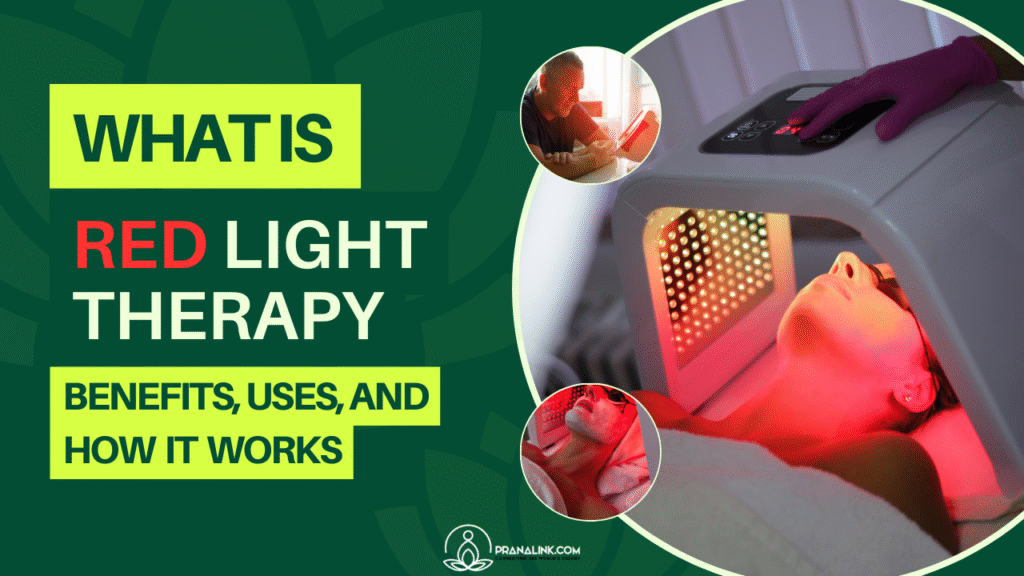
What Is Red Light Therapy? Benefits, Uses, and How It Works
Over the last few years, the Red-Light Therapy has become a popular wellness technology and can be found in fitness centers, skincare facilities, recovery studios, and home-use devices worldwide. It is becoming popular because it is interested in the approach of light-based practices that do not require invasive procedures, which can be easily integrated into the modern routine. This will help in explaining its increased popularity since they will know what this therapy is, how it functions, and why it is being used.
This article explains Red Light Therapy using its scientific background of photobiomodulation (PBM) and the interaction of specific wavelengths of light with biological tissue. This is aimed at having a clear and correct but balanced knowledge that will aid in making informed decisions.
What Is Red Light Therapy?
Red Light Therapy is a photobiomodulation (PBM) also known as low-level light therapy (LLLT). It involves exposing the body to regulated wavelengths of visible red and near-infrared radiant light with the help of LED-driven devices.
It does not use heat or physical changes to tissues (that are used in thermal or ablative treatment), unlike red light therapy. This light energy is given in low intensities and is aimed to affect the biological activity on the cellular level without causing damage to the cell and tissue structures. It is due to this that it is broadly classified as being noninvasive and supportive.
Photobiomodulation: The Scientific Basis
Photobiomodulation is the interaction between light and biological systems that results in observable cellular responses. This interaction is observed in red light therapy, where it occurs primarily in mitochondria, the organelles that produce cellular energy.
Some of these cellular materials are known as chromophores and absorb light of particular wavelengths. One of the most studied chromophores in the investigation of PBM is cytochrome c oxidase (CCO) that is an enzyme of the mitochondrial respiratory chain. The absorption of the red or near-infrared light by CCO can influence cellular respiration, availability of energy, and the activity of signaling.
It is associated with increased release of adenosine triphosphate (ATP), regulated release of nitric oxide and activation of signaling pathways in tissue maintenance and recovery.
How Red-Light Therapy Works at the Cellular Level
On a cellular level, Red Light Therapy helps the body to maintain good processes instead of imposing change. Mitochondrial light absorption can be used to increase the efficiency of the energy-conversion reactions, especially during stress or high-demand periods.
Photobiomodulation also has been studied regarding the control of oxidative stress and inflammatory signal transduction. These microscopic reactions can be used to understand why red-light therapy is utilized in different wellness and recovery facilities. Notably, it varies with factors like wavelength, dose, exposure time and tissue properties.
Why Wavelength Matters
Not every wavelength of light acts in the same manner in biological tissue. Red-light therapy works through an optical window, a range in which light absorption by skin pigments, hemoglobin, and water is low, thereby enabling deeper penetration.
Red light (approximately 600–700 nm) primarily interacts with skin and superficial tissues.
Light of near infrared (approximately 700-950nm) is more penetrative and reaches muscles, joints and connective tissues.
Lower wavelengths, like blue light, are more readily absorbed nearer to the surface whereas longer infrared wavelengths are more readily absorbed by water, hence lowering the penetration.
Tissue Penetration and Biological Targeting
The depth of penetration is dependent on wavelength, tissue type, pigmentation and hydration.
- Red light reaches several millimeters into tissue, enabling surface and near-surface applications.
- Near-infrared light can penetrate to a few centimeters in ideal circumstances.
This variation determines why varying wavelengths are used based on the preferred biological target.
Wound Healing and Skin Repair.
One of the most studied fields of photobiomodulation is wound healing. It has been demonstrated experimentally that wound healing is accelerated in keratinocyte models using 660nm red light. These effects can be explained by the fact that the increased activity and growth factor stimulation of the mitochondria are involved in repairing tissues.
Blue light (405-470 nm) has also been studied for use in wound-related applications. Scientific evidence suggests a dose-dependent effect: low doses can promote cell growth, while high doses can inhibit it. This supports the necessity of light-based applications that require controlled dosing.
Physical Function, Recovery, and Muscle Performance.
Photobiomodulation on the wavelengths of 655-905nm has been associated with increased fatigue resistance and functional performance in healthy persons. These effects are especially applicable to fitness- and recovery-based environments.
The near-infrared wavelengths of 808-850nm are commonly chosen in elderly individuals to reach deeper muscle and joint tissue. Studies indicates that these wavelengths have the potential of providing relief and lowering fatigue following exercise when used properly.
Nerve regeneration and Neural Support.
Recent studies have examined the potential of using a combination of 660 nm and 789 nm in nerve related research especially after surgical trauma. These studies assert that photobiomodulation is capable of enhancing nerve repair by enhancing the activities of the mitochondria and regulating cellular signaling.
This field remains underexplored, although it has helped generate broader interest in the use of PBM in neural support applications.
Cellular and Tissue Engineering Research
Photobiomodulation has also been examined in cellular and tissue engineering applications. Red and near-infrared wavelengths within the 750–1100 nm optical window have been shown to penetrate formed tissue constructs and influence cell viability and tissue healing.
The study highlights the potential of light-based stimulation to influence the functioning of biological systems at depths beyond surface tissues when properly applied.
Pain and Inflammation Modulation
Systematic reviews on photobiomodulation for musculoskeletal conditions, such as temporomandibular disorders, indicate that pain and functional results are minimized when proper wavelength and dosages are used.
Rather than suppressing discomfort, PBM is examined in its effect on inflammatory signals and cellular stress response, which are part of tissue functioning.
Home Use and Accessibility
The red-light therapy can now be used at home after the technology was developed. The use of small panels, portable devices, and wearables will allow people to implement the sessions in their lives.
When using it at home, it is important to observe the details provided by the manufacturer with regards to distance, exposure time, and frequency. Responsible use guarantees consistency and a positive experience.
Safety and General Considerations.
Non-ionizing light is the one used in red light therapy, and this is not the same as radiations related to damage to tissues. Red light therapy is typically low risk when used as instructed.
Users are generally advised not to come in direct contact with the eyes and follow instructions strictly. It is just as well as any other form of wellness technology is used responsibly.
Red Light Therapy as a part of a Healthy Lifestyle.
Red-Light Therapy works best in a combination with a healthy lifestyle which also includes proper nutrition, body exercise, sleep and stress management. It does not aim to substitute professional assistance or healthy living, but to complement them. This integrative position has enabled it to gain worldwide adoption in wellness cultures.
Conclusion
Red Light Therapy is a scientifically based form of photobiomodulation that uses specific red and near-infrared wavelengths to interact with biological tissue at the cellular level. It promotes physiological mechanisms without invasive intervention by modulating the mitochondrial function, cellular signaling and tissue responses. Knowledge of wavelength selection, tissue penetration and biological processes enables individuals and organizations to critically evaluate the use of Theas technologies. Red light therapy is a convenient and versatile part of contemporary wellness and recovery systems when practiced responsibly.
Frequently Asked Questions
Is Red Light Therapy safe to use?
As long as it is used in line with the stipulations of the device, then it is generally low risk.
2. How often is Red Light Therapy typically used?
The frequency of usage varies depending on the purpose and device, although it is used several times a week by many people.
3. Is Red Light Therapy at home usage possible?
Surely, there are lots of devices that are oriented to safe home use.
4. Is Red Light Therapy painful or hot?
No, it is light instead of hot and is typically comfortable.
5. Does Red Light Therapy fit the other lifestyles?
Yes, it may be adjusted to rather various routines and settings.