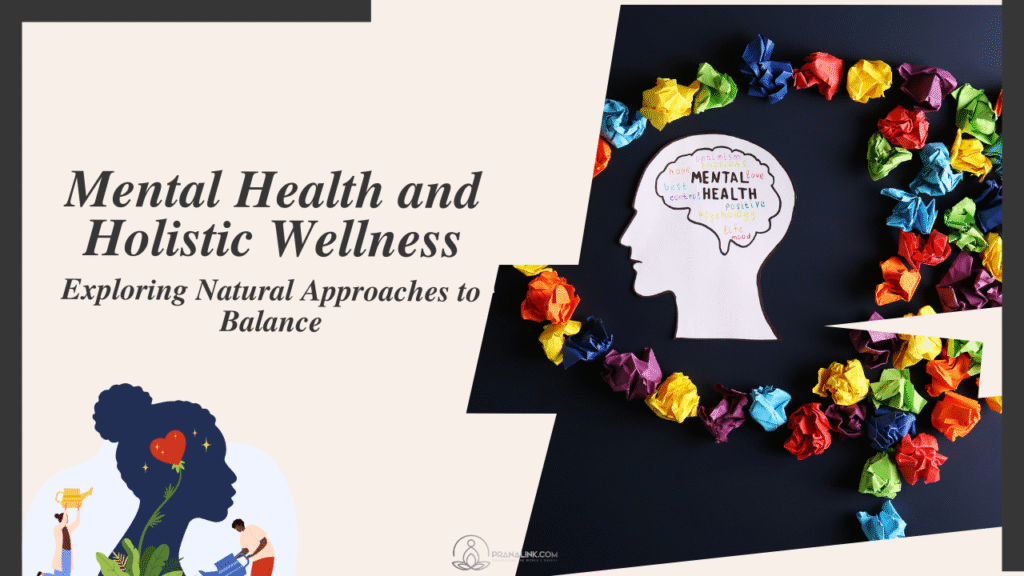
Mental Health and Holistic Wellness: Exploring Natural Approaches to Balance
In the recent years, there has been a remarkable growth in the global consciousness of Mental Health. Governments, healthcare professional, educators, and wellness organizations have realized that psychological well-being is a very important determinant of the quality of life. Stability of emotion, mental clarity and strength determine the way individuals work, form relationships and react to daily challenges.
Even though clinical treatment and professional therapy is still a crucial element to many people, the supportive lifestyle practices that ensure balance and well-being in the long run are gaining more and more popularity. The holistic wellness strategies focus on the interaction between mind and body, environment and behavior. The practices are not substitutes to professional healthcare, but they can be used as a supplement to promote practices that reinforce emotional resilience and recovery to stress.
In this article, the idea of holistic wellness is examined in relation to Mental Health, the science of mind body connection, and real-life lifestyle aspects that promote psychological balance.
Learning about Mental Health in a Contemporary World.
Mental Health are the psychological, emotional and cognitive wellbeing of an individual. It affects the way people think, feel, cope with stress, make decisions and socialize with others. rather than merely the lack of disease, it is the ability to perform well in day-to-day life.
The current studies highlight that well-being is a concept that exists in a spectrum. People could experience the strong moments and moments when they require more support because of stress or emotional problems. Mental states are influenced by environmental factors, life events, genetics and lifestyle habits.
The identification of these influences has led to a more inclusive discussion on prevention and long-term resilience. The concept of holistic wellness aims at reinforcing positive practices that may help balance the emotional state in the long run.
The Mind–Body Connection
Scientific studies have continued to show a strong correlation between psychological processes and physical systems. The responses to stress such as hypothalamic-pituitary-adrenal (HPA) axis initiates the release of hormones like cortisol. The activation of the short-term is protective, yet the chronic stress could affect sleep patterns, energy levels, and immune response.
This interaction can be understood to explain why Mental Health can be influenced by lifestyle factors. When the body is under constant pressure or is subjected to continuous stimulation on the nervous system, the body might fail to get back to its relaxed state. Conversely, emotional balance could be achieved via activities that encourage relaxation and self-awareness.
This relationship is usually referred to as a mind and body relationship in holistic wellness frameworks. Scientifically, the concept demonstrates complicated communication between the neurological system, hormonal system, and immune system.
Stress Management and Emotional Regulation
Stress is an inevitable aspect of life but when it is not managed, stress may slowly impact the emotional stability. Numerous people are trying to find solutions that allow them to deal with difficulties better. Mindfulness meditation, breathing exercises, and reflective journaling are some of the techniques that are extensively discussed in terms of Mental Health.
Mindfulness practices help the individuals to be aware of thoughts and feelings without judging them instantly. It has been proposed that a regular practice of mindfulness can enhance emotional regulation and attention control. There are also possibilities that controlled breathing exercises can impact on the autonomic nervous system in favor of relaxation reactions.
Emotional awareness could assist individuals in identifying stress patterns early enough before they become overwhelming. Such practices are commonly integrated into holistic wellness programs that are supposed to sustain resilience in the long run.
The Role of Physical Activity
Exercise is very important in sustaining Mental Health. Exercise has an effect on the brain chemistry, circulatory and energy levels. The moderate exercise has also been linked to better mood and less perception of stress.
Walking, yoga, cycling, or swimming are all activities that can help maintain health, both physical and psychological. The normal movement of the body stimulates the release of endorphins and other neurotransmitters which are linked to mood stability.
Notably, physical activity does not require intense exercise to be healthy. Regularity and enjoyment tend to be important as opposed to intensity in creating sustainable habits.
Nutrition and Psychological Well-Being
Nutrition and Mental Health is a relationship that has received more scientific interest. The brain needs constant intake of nutrients to ensure neurotransmitter balance and brain functioning.
Well-balanced diets including fruits, vegetables, whole grains, healthy fat, and proper protein can help in overall functionality of the brain. Concentration and energy levels were also influenced by hydration and normal blood sugar levels.
Even though nutrition’s cannot solve complicated psychological issues it has a role in a larger lifestyle model that helps in creating emotional resilience.
Sleep and Cognitive Balance
During sleep, the brain processes information, regulates hormones, and restores cognitive function. Poor sleep may result in irritability, poor concentration and extremely sensitive to stress.
The practice of holistic wellness usually centers on regular sleeping. Restorative rest can be facilitated by limiting the amount of screen time prior to sleep, having a consistent schedule, and establishing a relaxing sleep environment.
The quality of sleep is likely to improve the quality of emotional regulation and daily performance.
Social Connection and Community
Humans are social creatures and helping relationships are very crucial in the sustenance of Mental Health. Positive social interaction may offer emotional support, understanding and ability to communicate meaningfully.
Isolation or lack of connection may increase stress and reduce resilience. Developing supportive networks, such as family, friends, community, work, etc., can be used to establish a sense of belonging.
Community is often emphasized in the models of holistic wellness as a component of overall well-being.
Digital Balance and Modern Lifestyle
Cognitive overload may also be increased by modern technology that has changed the way people communicate and work, as they are always connected to one another. Continuous notifications, social media engagement, and spending a lot of time at the screen can also cause mental exhaustion.
The development of digital boundaries is becoming a supportive practice in Mental Health. Screen time breaks, spending time outdoors, and focusing on offline communication can be helpful in restoring attention, as well as in alleviating overstimulation.
The ability to balance between technology and real-life experience is a significant element of the modern wellness.
Natural Environments and Psychological Restoration
Access to natural environments may have a relaxing effect on the human nervous system. Outdoor time: Walking in a park, being on or close to water, or observing natural scenery can make one feel better and relaxed.
researchers of environmental psychology have noticed natural environments have the potential to mitigate perceived stress and aid attention recovery. These implications demonstrate how outside environments may have a small, but significant impact on Mental Health.
When Professional Support Is Important
Emotional balance can be supported by holistic wellness practices which do not replace professional care in case of clinical conditions. The medical treatments offered by certified medical practitioners, psychologists and counselors are evidence-based and targeted to address specific problems.
And to ensure the everyday functioning, professional help is an important step in case of persistent distress, anxiety, or mood disturbance. Professional care can be used together with lifestyle approaches to well-being to form a comprehensive approach.
Conclusion
Good Mental Health is more than simply dealing with problems as they occur. It involves continuous tracking of lifestyle practices, emotional intelligence and supportive conditions. The emphasis of the holistic approach to wellness is on the relationship between the mind, body, and everyday activities.
Mindfulness, exercise, healthy eating, sleep, and connection in social life are some of the long-term resilience practices. These strategies do not substitute medical treatment, although they can help in offering effective instruments of maintaining emotional stability in daily living. Having a sense of the more general determinants of wellbeing, people can make knowledgeable decisions to live a more healthy and balanced life.
Frequently Asked Questions (FAQs)
1. What does Mental Health mean?
It is the emotional, psychological and cognitive well-being that influences the way individuals think, feeling and handling daily existence.
2. Can lifestyle habits affect Mental Health?
Yes. Psychological well-being is affected by such factors as sleep, exercise, diet, coping with stress, and social relationships.
3. Are wellness holistic practices scientifically supported?
Numerous coping methods that include mindfulness, exercise, and sleep management have studies that substantiate their effects on the reduction of stress and emotional control.
4. Is it possible that professional treatment can be substituted by natural wellness methods?
No. They are complementary practices and they ought to be used to augment professional healthcare where necessary.
5. How can someone begin improving daily well-being?
Habits like frequent workouts, healthy eating, regular sleep and conscious relaxation exercises to aid in general balance can be initiated with small habits.