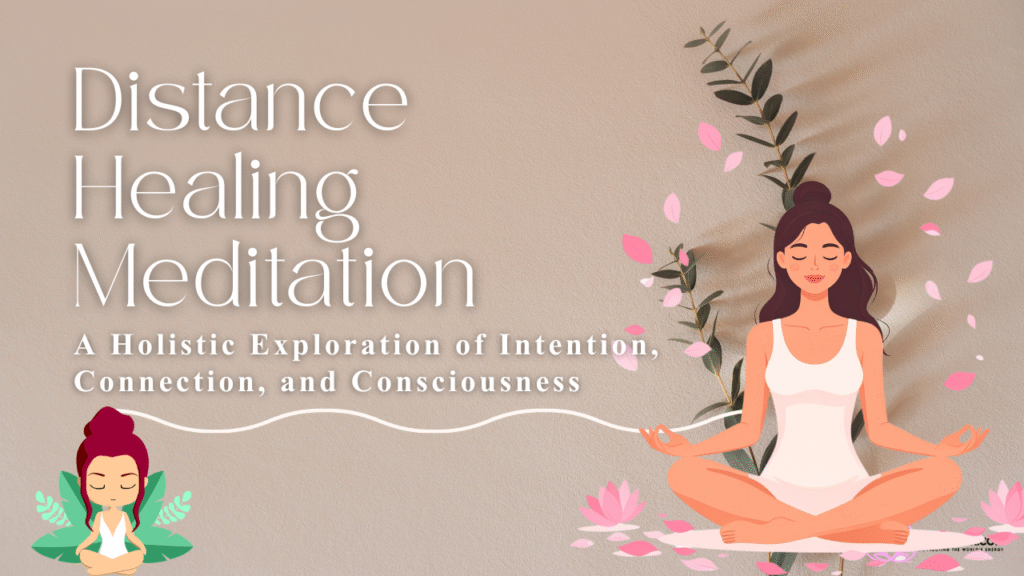
Distance Healing Meditation: A Holistic Exploration of Intention, Connection, and Consciousness
People have practiced meditation for centuries to understand how attention and intention affect well-being. Most meditation styles help us become more aware of ourselves and find inner balance, but some go further—inviting us to connect with others, even across distance. Distance Healing Meditation is one such practice. In it, you focus your awareness and send kind intentions to someone who isn’t physically with you, supporting their well-being from afar.
This approach, rooted in holistic wellness traditions, encourages us to think about connection in a new way—one that goes beyond being physically close. It’s about the subtle ways our minds and emotions interact, and how, in some traditions, people believe our awareness can reach others, no matter where they are. In summary, Distance Healing Meditation centers on fostering meaningful connections beyond physical boundaries.
Note: The perspectives shared here are educational in nature and reflect ideas commonly found in holistic wellness communities. They do not aim at diagnosing, treating, curing or preventing a medical condition.
What Is Distance Healing Meditation?
Distance Healing Meditation is a contemplative practice in which an individual enters a calm, focused state and directs supportive intention, awareness, or compassion toward another person at a distance. This is generally achieved by a combination of:
- Mindful breathing
- Relaxation techniques
- Visualization practices
- Focused intention
Instead of physical contact, this meditation is about being present, clear, and emotionally in tune. People often describe it as creating a caring, open space in their minds for someone else’s well-being—even from far away.
In holistic wellness, the benefits of this practice aren’t just about helping others. It also helps the person meditating feel calmer, more empathetic, and more connected to themselves and others. In summary, both personal and collective well-being are nurtured through this practice.
Historical Roots and Cultural Perspectives
Practices resembling Distance Healing Meditation appear across many spiritual and philosophical traditions. While terminology varies, the underlying principle—directing benevolent intention beyond oneself—is widely shared.
Examples include:
- Loving-kindness (metta) practices in contemplative traditions
- Prayer and intercessory intention in religious contexts
- Collective meditation rituals focused on peace or healing.
These traditions emphasize cultivating compassion, emotional awareness, and interconnectedness. Whether interpreted spiritually, psychologically, or symbolically, the act of directing goodwill toward others has long been part of human contemplative practice. In summary, many contemplative traditions center on fostering goodwill and connection.
The Practice: How It Works
A typical session begins by creating a quiet, comfortable environment. The practitioner:
- Settles into a relaxed posture
- Focuses on slow, steady breathing
- Helps the mind achieve a state of calmness and focus
Once a relaxed state is established, attention shifts toward the intended recipient. This may involve:
- Visualizing the person
- Recalling their presence or energy
- Imagining them surrounded by calm, light, or balance
Importantly, the practice is not about controlling outcomes. Instead, it emphasizes maintaining a steady, compassionate awareness without attachment. Many practitioners report that this process deepens their own emotional clarity and sense of connection. Overall, this process can be as transformative for the practitioner as for the recipient.
The Role of Intention and Focus
Intention is central to Distance Healing Meditation. It refers to the deliberate direction of attention toward a chosen purpose or state of being.
From a psychological standpoint, focused intention can:
- Shape emotional responses
- Increase empathy and compassion.
- Enhance self-regulation and mindfulness.
By sustaining attention on supportive or positive states, practitioners may experience shifts in their own emotional landscape. In this sense, the primary and most measurable effect of the practice often occurs within the practitioner themselves.
Energy, Consciousness, and Holistic Perspectives
Holistic wellness philosophies often describe human beings as interconnected through subtle systems of energy or consciousness. Within this framework, meditation is seen as a way to harmonize internal states and potentially influence relational dynamics.
Some modern interpretations draw parallels between these ideas and concepts from physics—particularly quantum entanglement, a phenomenon in which particles remain correlated regardless of distance. While this concept is sometimes used metaphorically to describe interconnectedness in consciousness, it is important to note that:
- Quantum entanglement is a rigorously defined physical phenomenon.
- Its application to human consciousness or healing remains speculative.
- That said, the metaphor resonates with many practitioners as a way to conceptualize non-local connection and unity.
Other distant or non-local healing traditions include:
- Reiki and energy healing practices
- Prayer-based healing
- Collective intention experiments
- Shamanic or indigenous healing rituals
These systems differ widely in their beliefs and methods but share a common emphasis on intention, connection, and the possibility of influence beyond physical proximity.
Scientific Perspectives
Modern research has extensively documented the benefits of meditation, including:
- Reduced stress and anxiety
- Improved attention and focus
- Enhanced emotional regulation
- Increased sense of well-being
Research specifically on distance or intention-based healing is ongoing and remains inconclusive. Some exploratory studies suggest potential effects, while others find no measurable impact beyond placebo or psychological factors.
As a result, most scientists and healthcare professionals consider Distance Healing Meditation a complementary wellness practice rather than a clinical intervention.
Potential Benefits for Practitioners
Even when directed toward others, Distance Healing Meditation often produces meaningful benefits for the practitioner, including:
- Greater emotional awareness
- Increased empathy and compassion
- Reduced mental tension
- Enhanced sense of connection
The act of focusing on care and compassion can itself be transformative, reinforcing positive mental and emotional patterns.
Distance Meditation in Modern Wellness Culture
In today’s interconnected world, people maintain relationships across vast distances. This has contributed to the growing interest in practices that foster connection without physical presence.
Modern developments include:
- Online group meditation sessions
- Global synchronized meditation events
- Guided apps and virtual communities
These platforms make it easier for individuals to engage in shared intention practices, often centered on themes like peace, healing, or collective well-being. In summary, technology has expanded access to distance meditation practices globally.
Ethical and Responsible Use
Distance Healing Meditation should be approached with balance and clarity. It is best understood as a supportive practice that complements, rather than replaces, professional care.
Key considerations:
- It should not substitute medical or psychological treatment.
- Consent and respect for others’ autonomy are important.
- Expectations should remain grounded and realistic.
When practiced responsibly, it can be a meaningful addition to a holistic wellness routine. In summary, ethical practice and realistic expectations are vital for positive outcomes.
Integrating the Practice into Daily Life
Beginners may begin with brief sessions of 10-15 min. In the long run, consistency is more important than time.
Helpful complementary practices include:
- Breathwork
- Journaling
- Gentle movement (like yoga or walking)
- Mindfulness exercises
Together, these can deepen the experience and support overall well-being. In summary, integrating complementary practices strengthens the impact of Distance Healing Meditation.
Conclusion
Distance Healing Meditation brings together mindfulness, compassion, and the human desire for connection. While research on intention-based practices continues, the personal benefits of meditation—like clarity, calm, and emotional balance—are well established and accessible. By fostering these qualities, Distance Healing Meditation supports personal growth and strengthens the bonds we share with others.
However, you approach it—psychologically, philosophically, or holistically—this practice offers an accessible way to build presence and compassion, extending connection far beyond physical boundaries. Integrating Distance Healing Meditation into daily life can support emotional health and a greater sense of unity with others.
Frequently Asked Questions (FAQs)
1. What is Distance Healing Meditation?
It is a meditation practice where an individual directs intention and compassionate awareness toward someone who is not physically present.
2. Is it scientifically proven?
Meditation itself is well-supported by research. Distance healing practices are still being studied and remain inconclusive.
3. Can it replace medical treatment?
No. It should be used as a complementary practice, not a substitute for professional care.
4. How long should a session be?
Beginners can start with 10–15 minutes and adjust as they become more comfortable and experienced.
5. Can beginners practice it?
Yes. The practice is accessible and primarily involves relaxation, breathing, and focused in